Brushing your dog's teeth is the gold standard for at-home dental care, but the reality is that many dogs will not tolerate a toothbrush, and many owners struggle to maintain a daily brushing routine. If you fall into either of those categories, you are not alone. Studies suggest that fewer than five percent of dog owners brush their dog's teeth regularly. The good news is that there are several effective alternatives that can meaningfully reduce plaque and tartar buildup even without a toothbrush.
In this guide, we cover seven practical methods for keeping your dog's teeth cleaner between professional veterinary cleanings. While none of these approaches fully replaces brushing, each one can contribute to better oral health when used consistently. For those who can brush, pairing these methods with a quality dog toothpaste produces the best results.
Why Dental Care Matters Even Without Brushing
Periodontal disease is the most common clinical condition in adult dogs, affecting the vast majority by age three. It begins with plaque, a sticky bacterial film that coats the teeth within hours of a cleaning. If not removed, plaque mineralizes into tartar within 24 to 72 hours. Tartar cannot be removed by brushing or any at-home method and requires professional veterinary dental scaling under anesthesia.
The consequences of untreated dental disease extend well beyond the mouth. Chronic oral infections can introduce bacteria into the bloodstream, potentially affecting the heart, liver, and kidneys. Dogs with advanced periodontal disease also experience significant pain, which often goes unnoticed because dogs are remarkably good at hiding discomfort. Any effort you make to reduce plaque accumulation, even without a toothbrush, provides meaningful health benefits for your dog.
7 Methods to Clean Your Dog's Teeth Without Brushing
Here is a detailed look at the most effective brushing alternatives available, along with how they work and what to expect from each approach.
1. Dental Chews
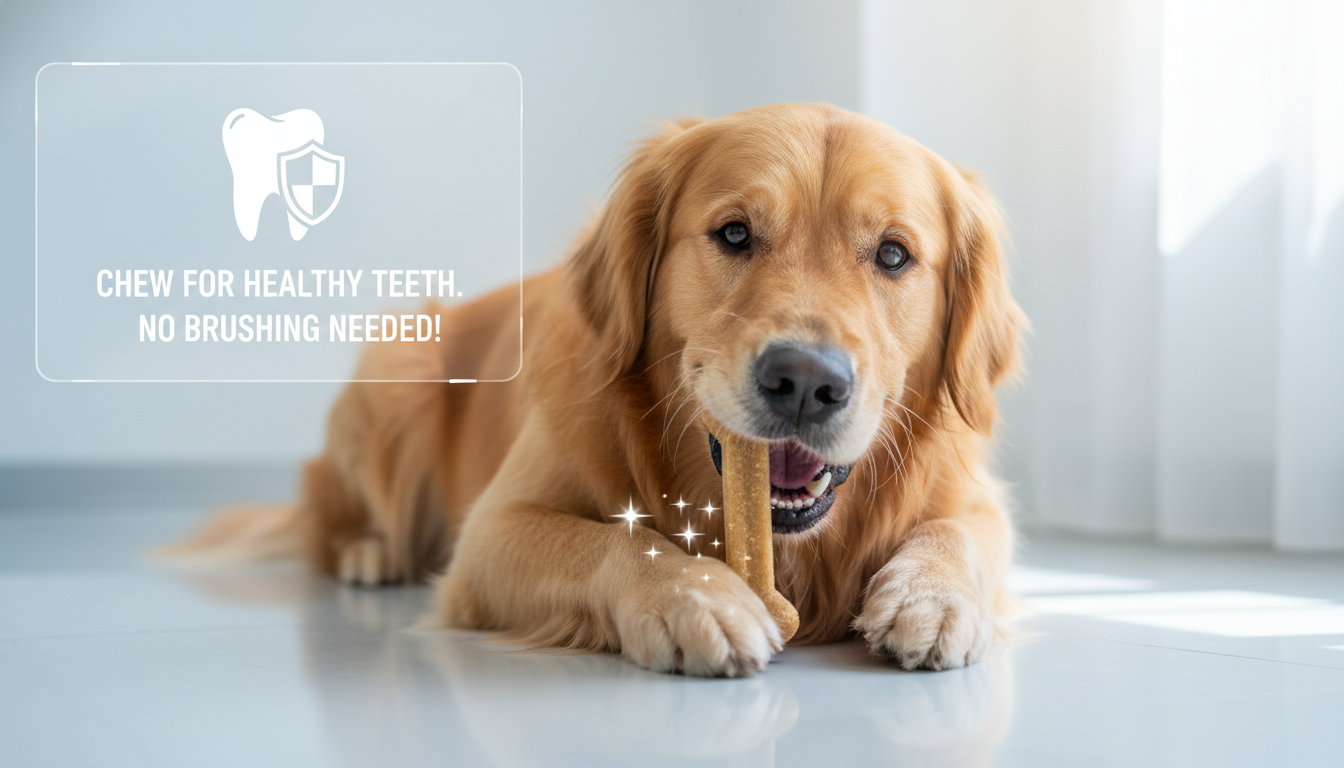
Dental chews are one of the most popular and effective non-brushing methods for controlling plaque and freshening breath. These treats are designed with textures and shapes that mechanically scrape plaque from the tooth surface as your dog chews. The best dental chews carry the Veterinary Oral Health Council (VOHC) Seal of Acceptance, which means they have been tested and shown to reduce plaque or tartar by a meaningful percentage.
Products like Greenies, Whimzees, and OraVet dental chews are among the most widely recommended. Look for chews that are appropriately sized for your dog. A chew that is too small may be swallowed whole without providing any dental benefit, while one that is too large could be difficult for smaller breeds to work with effectively. Most dental chews are intended to be given once daily for consistent plaque control.
2. Water Additives
Dental water additives are liquid formulas that you mix into your dog's drinking water. They contain antimicrobial agents, typically cetylpyridinium chloride or chlorhexidine, that help reduce bacterial populations in the mouth throughout the day. The concept is similar to a human using mouthwash, except your dog receives the benefit passively with every drink.
Water additives are among the easiest dental care methods to implement because they require no cooperation from your dog. Simply add the recommended amount to fresh water daily. However, some dogs detect the taste and may initially drink less water, so monitor consumption when you first introduce an additive. Odorless and flavorless formulas tend to have the highest acceptance rates.
3. Dental Wipes
Dental wipes are textured pads pre-moistened with cleaning and antimicrobial solutions. You wrap the wipe around your finger and rub it along your dog's teeth and gumline. While this still requires your dog to tolerate having their mouth handled, many dogs who resist a toothbrush will accept a finger wipe because it feels less intrusive.
Wipes are most effective on the smooth outer surfaces of the teeth and provide a moderate level of plaque disruption. They do not reach between teeth or below the gumline as effectively as brushing, but they offer a practical middle ground for dogs who reject traditional brushing tools. Use them daily for the best results and always follow the product instructions regarding how long to work on each area of the mouth.
4. Raw Bones
Raw, meaty bones provide a natural mechanical cleaning action as your dog gnaws and scrapes the bone surface against their teeth. The chewing action helps remove plaque from the tooth surface, and the bone itself provides a mild abrasive effect. Many holistic and raw-feeding veterinarians recommend raw bones as part of a dental care regimen.
However, raw bones come with important safety caveats. Never give cooked bones, as they can splinter and cause intestinal punctures or obstructions. Choose bones appropriate for your dog's size and always supervise bone chewing sessions. Some dogs are aggressive chewers who may fracture a tooth on very hard bones, so consult your veterinarian about which types are safest for your dog's chewing style. Common recommendations include raw beef knuckle bones or raw poultry necks for smaller dogs.
5. Dental Sprays and Gels
Dental sprays and gels deliver antimicrobial ingredients directly to the tooth surface without requiring a brush. Most products use a combination of enzymes, zinc compounds, or chlorhexidine to inhibit bacterial growth and reduce plaque formation. You apply the spray or gel by lifting your dog's lip and directing the product onto the outer surfaces of the teeth and gums.
Some sprays are designed to coat the teeth after a meal, providing a protective antimicrobial layer during the period when plaque-forming bacteria are most active. Gels tend to have a thicker consistency that adheres to the tooth surface for longer contact time. Both delivery methods offer convenience and require less handling than wipes or brushing. For a comparison of top toothpaste options that work well in gel form, see our best dog toothpaste guide.
6. Professional Dental Cleanings
While not a daily at-home method, professional dental cleanings performed by your veterinarian are the most thorough way to address dental health. A professional cleaning involves scaling to remove all plaque and tartar above and below the gumline, polishing to smooth the tooth surface and reduce future plaque adhesion, and a full oral examination to identify any problems early.
Most veterinarians recommend professional cleanings annually for dogs, though some dogs with a genetic predisposition to dental disease or certain breeds may need cleanings more frequently. The procedure requires general anesthesia, which adds cost and involves minor risks, but it provides a level of cleaning that no at-home method can match. Think of professional cleanings as the foundation of your dog's dental care plan, with at-home methods serving to extend the time between cleanings.
7. Dental Diets
Several pet food manufacturers offer prescription and over-the-counter dental diets designed to clean teeth during normal eating. These kibbles are larger than standard food, which forces the dog to chew rather than swallow whole. The kibble texture is engineered to resist crumbling, so the tooth sinks into the kibble and gets wiped clean in the process. Some dental diets also contain polyphosphate coatings that bind calcium in saliva, reducing the mineralization of plaque into tartar.
Hill's Prescription Diet t/d and Royal Canin Dental are among the best-known dental diets and have earned VOHC acceptance. These diets can serve as your dog's complete daily nutrition while providing ongoing dental benefits with every meal. Dental diets are an excellent option for dogs who resist all other forms of dental care, since the cleaning happens automatically during feeding. Consult your veterinarian to determine whether a dental diet is nutritionally appropriate for your dog's specific needs. For more options, explore our pet supplements guide.
Comparing Brushing Alternatives: Which Method Is Right for Your Dog?
Each method has different strengths in terms of effectiveness, cost, and ease of use. The following comparison can help you identify which approach best fits your situation and your dog's temperament.
| Method | Effectiveness | Monthly Cost | Ease of Use | Best For |
|---|---|---|---|---|
| Dental Chews | High | $15 - $30 | Very Easy | Dogs who love to chew |
| Water Additives | Moderate | $8 - $15 | Effortless | Hands-off owners |
| Dental Wipes | Moderate-High | $10 - $20 | Moderate | Dogs tolerant of handling |
| Raw Bones | Moderate-High | $10 - $25 | Easy (supervised) | Moderate chewers |
| Dental Sprays | Moderate | $10 - $20 | Easy | Quick daily routine |
| Professional Cleaning | Very High | $25 - $60 (amortized) | Requires vet visit | All dogs (annually) |
| Dental Diets | Moderate-High | $40 - $70 (replaces food) | Effortless | Dogs resisting all other methods |
For the best results, consider combining two or more methods. A common effective combination is daily dental chews plus a water additive, with annual professional cleanings. This multi-layered approach addresses plaque from multiple angles and provides significantly better protection than any single method alone.
No at-home dental care method fully replaces professional veterinary dental cleanings. Even with diligent home care, annual professional examinations and cleanings remain the foundation of good canine dental health.
Signs Your Dog Needs Professional Dental Attention
Regardless of which at-home methods you use, watch for these signs that indicate your dog needs to see a veterinarian for dental evaluation.
- Persistent bad breath: While some degree of dog breath is normal, a strong or worsening odor often indicates bacterial overgrowth or infection.
- Red or swollen gums: Healthy gums should be pink and firm. Redness, swelling, or bleeding when chewing are signs of gingivitis or more advanced disease.
- Difficulty eating or dropping food: Changes in eating behavior may indicate oral pain from loose teeth, abscesses, or gum disease.
- Visible tartar buildup: Brown or yellow deposits along the gumline indicate mineralized plaque that requires professional removal.
- Pawing at the mouth: This behavior often signals oral discomfort and warrants prompt veterinary examination.
- Loose or missing teeth: In adult dogs, loose teeth typically indicate advanced periodontal disease requiring treatment.
Conclusion: Building a Practical Dental Care Routine
Perfect should not be the enemy of good when it comes to your dog's dental health. If brushing is not feasible, the methods outlined in this guide offer meaningful alternatives that can significantly slow the progression of dental disease. The most important step is choosing at least one method and using it consistently.
Start with the approach that best matches your lifestyle and your dog's temperament. If your dog loves treats, dental chews are an easy entry point. If you want something completely passive, a water additive requires no cooperation from your dog at all. Whatever you choose, pair it with annual professional dental evaluations to catch any problems early and maintain a baseline of thorough cleaning.
For product recommendations and detailed comparisons, visit our Dental Health Products guide to explore the best options available for your dog's dental care needs.