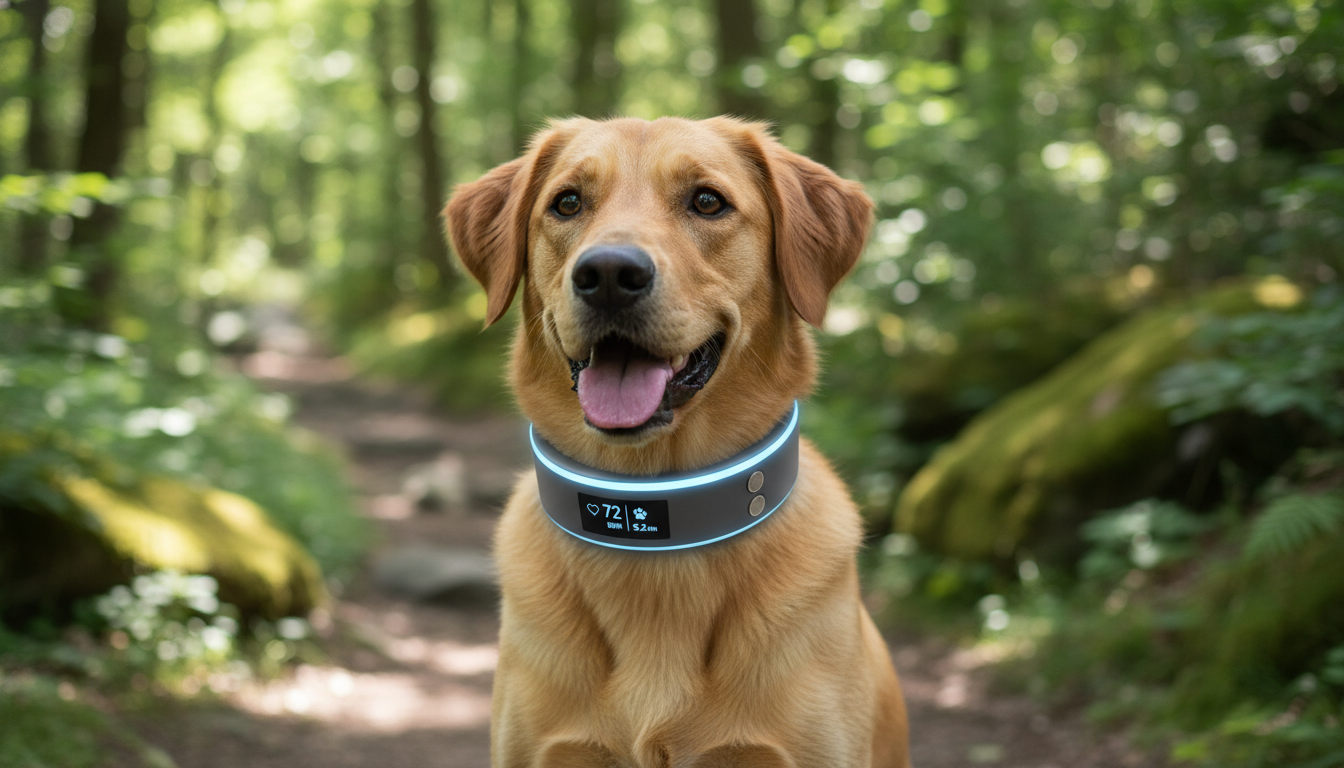
The idea of monitoring your dog's heart rate from your smartphone might have sounded like science fiction a few years ago, but smart collar technology has advanced rapidly. Today, several companies offer wearable collars and collar attachments that continuously track your dog's heart rate, respiratory rate, activity levels, and sleep patterns. These devices promise to give pet owners an unprecedented window into their dog's health, potentially catching issues before they become serious.
But how accurate are these consumer-grade heart rate monitors? Can they actually detect health problems early? And do the benefits justify the investment when you factor in the cost of the device, any required subscriptions, and the limitations of the technology? In this review, we take a close look at the leading smart collars with heart rate monitoring capabilities, compare their features and performance, and help you decide whether one of these devices makes sense for your dog.
How Smart Collars Measure Heart Rate
Smart collars use different technologies to measure heart rate, and understanding these differences is important for evaluating accuracy and reliability. The most common approach is photoplethysmography (PPG), the same light-based sensor technology used in human fitness watches. PPG sensors emit light into the skin and measure the amount of light reflected back, which changes with each heartbeat as blood volume in the tissue fluctuates.
The challenge with using PPG on dogs is fur. Human wrist-based heart rate monitors work well because they sit directly against bare skin. On dogs, fur creates a barrier between the sensor and the skin that can significantly affect reading accuracy. Some smart collars address this by using longer-wavelength light that penetrates deeper, positioning sensors against areas with less fur (like the underside of the neck), or using proprietary sensor arrays designed specifically for pet physiology.
A few advanced collars use electrocardiogram (ECG) or bioimpedance sensors, which measure electrical signals from the heart rather than optical blood flow changes. These tend to be more accurate than PPG but require consistent skin contact, which can be challenging to maintain on an active dog. Some devices combine multiple sensor types for improved reliability.
What Heart Rate Data Can Tell You
A dog's resting heart rate varies by size: small dogs typically have resting heart rates between 100 and 140 beats per minute, while large breeds usually fall between 60 and 100 BPM. Tracking your dog's heart rate over time can reveal several important health insights:
- Baseline Establishment: By monitoring heart rate consistently over weeks and months, smart collars establish a personalized baseline for your dog. Deviations from this baseline can be early indicators of illness, pain, or stress that might otherwise go unnoticed.
- Heart Rate Variability (HRV): Some advanced collars track not just heart rate but heart rate variability, which measures the variation in time between consecutive heartbeats. Lower HRV can indicate stress, fatigue, or developing illness, while higher HRV generally suggests good cardiovascular health and recovery.
- Activity Response: How your dog's heart rate responds during and after exercise can reveal information about cardiovascular fitness and recovery. A heart rate that remains elevated long after exercise ends may warrant a veterinary consultation.
- Sleep Patterns: Heart rate during sleep should drop below resting levels. Consistently elevated nighttime heart rates can indicate pain, anxiety, respiratory issues, or other underlying health conditions.
- Respiratory Rate: Many devices that track heart rate also monitor respiratory rate. An elevated respiratory rate at rest can be an early sign of heart disease, lung problems, or pain.
How We Evaluated Smart Collars
We spent over 30 hours researching smart collars with heart rate monitoring capabilities. Our evaluation considered sensor accuracy based on veterinary comparisons and user reports, the range and depth of health metrics tracked, companion app quality and data presentation, battery life and charging convenience, build quality and comfort for dogs, and total cost of ownership including subscriptions.
We focused specifically on devices that offer continuous or frequent heart rate monitoring, not just activity tracking. Products that only measure steps and active minutes without vital sign data were excluded from this review. For a broader look at GPS-focused devices that also track some health metrics, see our guide on the best dog GPS trackers for health and safety.
Top Smart Collars with Heart Rate Monitoring
The following table compares the leading smart collars that include heart rate monitoring. Features vary significantly between devices, so pay close attention to which health metrics matter most to you and your dog's specific needs.
| Collar | Heart Rate | Activity | Sleep | GPS | Water Resistance | Price |
|---|---|---|---|---|---|---|
| PetPace | Continuous (PPG + ECG) | Yes | Yes | No | IP67 | $150 + $15/mo |
| Invoxia Smart Collar | Continuous (PPG) | Yes | Yes | Yes | IP68 | $249 + $13/mo |
| Fi Series 3 | No (activity only) | Yes | Yes | Yes | IP68 | $149 + $8/mo |
| Whistle Health 2.0 | Periodic (PPG) | Yes | Yes | Yes | IP67 | $140 + $10/mo |
| Halo Collar | Periodic (PPG) | Yes | Yes | Yes | IPX7 | $399 + $5/mo |
Detailed Collar Reviews
PetPace Smart Collar
PetPace is the most medically focused smart collar on this list and is the only consumer device that has been validated in peer-reviewed veterinary studies for heart rate monitoring accuracy. Originally developed for veterinary clinical use and later adapted for consumer applications, PetPace uses a combination of PPG and ECG-like sensors to provide continuous heart rate, respiratory rate, temperature, and body posture monitoring. The collar also tracks HRV, calories, and activity levels.
The companion app and web dashboard present health data in detailed, veterinary-grade reports that can be shared directly with your vet. PetPace also offers an optional telehealth service that connects you with veterinary professionals who can interpret your dog's data and provide guidance. The collar itself is designed as a complete collar replacement rather than an add-on, which ensures optimal sensor placement against the dog's neck.
The main drawback is that PetPace does not include GPS tracking, so you will need a separate device if location monitoring is important. At $150 for the collar plus $15 per month for the subscription, it is not cheap, but for dogs with known heart conditions, senior pets, or owners who want the most accurate and comprehensive health monitoring available, PetPace is the clear leader.
Invoxia Smart Collar
The Invoxia Smart Collar represents the most ambitious attempt to combine comprehensive health monitoring with GPS tracking in a single device. It uses PPG sensors to provide continuous heart rate and respiratory rate monitoring, alongside full GPS and LTE location tracking, activity tracking, and sleep analysis. The collar also monitors for unusual behavior patterns that could indicate health issues.
Build quality is excellent, with an IP68 water resistance rating and a sleek, comfortable design that dogs seem to tolerate well. The companion app presents health trends clearly and provides alerts when readings fall outside normal ranges. Battery life is approximately two to three weeks depending on GPS usage, which is competitive for a device with this many features.
At $249 plus $13 per month, the Invoxia is the most feature-complete option on this list but also one of the most expensive. Heart rate accuracy, while good for a consumer device, is not quite at the level of PetPace's clinical-grade sensors. For owners who want a single device that covers both health monitoring and GPS tracking without wearing two separate collars, the Invoxia is an excellent choice.
Fi Series 3
We include the Fi Series 3 because it is one of the most popular smart collars on the market and frequently mentioned in discussions about pet health monitoring. However, it is important to note that the Fi does not include heart rate monitoring. Its health features are limited to activity tracking (steps, distance, calories) and sleep monitoring. Where the Fi excels is GPS tracking, with industry-leading battery life of up to three months and excellent location accuracy.
If your primary concern is keeping track of your dog's location and basic activity levels rather than vital sign monitoring, the Fi is a fantastic device at a competitive price point. But if heart rate monitoring is your goal, you will need to look at the other options in this review. For a full comparison of the Fi against other GPS trackers, see our GPS tracker review.
Whistle Health 2.0
Whistle Health 2.0 takes a different approach to heart rate monitoring by using periodic spot checks rather than continuous monitoring. The device takes heart rate readings at regular intervals throughout the day and during specific activities, building a picture of your dog's cardiovascular health over time. It also tracks activity, sleep, scratching, licking, and drinking behaviors, making it one of the most comprehensive behavioral health monitors available.
The periodic heart rate approach means you will not get real-time continuous data, but for most pet owners, the trend data provided by regular spot checks is sufficient to identify concerning changes. The companion app is well-designed and makes it easy to spot deviations from your dog's established baseline. GPS tracking is included and works reliably using GPS, Wi-Fi, and LTE connectivity.
At $140 plus $10 per month, Whistle Health 2.0 offers a strong balance of health monitoring, GPS tracking, and behavioral insights at a mid-range price point. It is particularly well-suited for owners who want broad health monitoring without the premium cost of devices focused specifically on heart rate accuracy.
Halo Collar
The Halo Collar is primarily known as a GPS fence and training collar, but its latest version includes periodic heart rate monitoring and activity tracking as secondary features. The collar uses GPS to create customizable virtual fence boundaries and provides feedback to keep dogs within designated areas. Health monitoring is not the primary focus, but the addition of heart rate spot checks and activity tracking adds value for health-conscious owners.
At $399 for the hardware, the Halo is the most expensive device on this list, though its monthly subscription is the lowest at $5. The high upfront cost is justified primarily by the GPS fence functionality rather than the health monitoring, which is less detailed than dedicated health-focused devices. If you need a GPS fence collar and also want basic health tracking, the Halo serves both purposes. But if heart rate monitoring is your priority, other options on this list offer better value and deeper health insights.
Accuracy: Consumer Devices vs. Veterinary Equipment
One of the most important questions to address is how accurate consumer smart collars are compared to veterinary-grade equipment. The honest answer is that no consumer wearable matches the accuracy of a veterinary ECG or a clinical-grade pulse oximeter. However, the gap is narrowing, and for the purpose of tracking trends over time, consumer devices can provide genuinely useful data.
PetPace has been shown in published studies to correlate well with clinical measurements, particularly for resting heart rate and respiratory rate. Other consumer devices tend to be less accurate during vigorous activity (when motion artifacts interfere with sensor readings) but reasonably accurate during rest and light activity. The key is understanding that these devices are best used for trend monitoring rather than absolute precision.
Smart collars are health monitoring tools, not diagnostic devices. They can alert you to potential issues and help you make informed decisions about when to visit the vet, but they should never replace professional veterinary evaluation. If your collar flags a concerning trend, treat it as a reason to schedule a checkup, not as a definitive diagnosis.
Who Should Consider a Smart Collar?
Smart collars with heart rate monitoring are not necessary for every dog, but they can be particularly valuable in specific situations. Senior dogs benefit significantly from continuous health monitoring, as age-related conditions like heart disease, arthritis, and respiratory issues often develop gradually. A smart collar can detect subtle changes in vital signs or activity patterns that might otherwise go unnoticed until the condition becomes more advanced.
Dogs with known heart conditions or other chronic health issues are another group that can benefit greatly. Having continuous data to share with your veterinarian allows for more informed treatment decisions and better tracking of how well medications or interventions are working. Some veterinary cardiologists now specifically recommend smart collars for their cardiac patients.
Active and working dogs can benefit from monitoring that tracks cardiovascular fitness, recovery rates, and exercise tolerance. And for owners who are simply proactive about their dog's health, a smart collar provides a level of insight and awareness that was previously unavailable outside of a veterinary clinic.
Our Final Recommendation
If heart rate monitoring accuracy is your top priority, the PetPace Smart Collar is the clear winner. Its clinical-grade sensors and veterinary-validated technology provide the most reliable vital sign data of any consumer pet wearable. The trade-off is the lack of GPS tracking, which means you may need a separate device for location monitoring.
For owners who want the best of both worlds, the Invoxia Smart Collar combines comprehensive health monitoring with GPS tracking in a single, well-designed device. It is more expensive than alternatives, but eliminates the need for multiple collars and provides a cohesive health and safety monitoring experience.
If budget is a concern or if you need broad behavioral health insights alongside periodic heart rate data, the Whistle Health 2.0 offers the best value proposition with its combination of vital signs, activity tracking, behavioral monitoring, and GPS at a mid-range price.
For more information on smart health technology for pets, explore our comprehensive Smart Health Devices guide. If GPS tracking and safety are your primary concerns, our review of the best dog GPS trackers provides detailed comparisons of location-focused devices. And to ensure you are financially prepared for any health issues your smart collar might help detect, consider reviewing our Pet Insurance comparisons for plans that cover diagnostics and treatment.