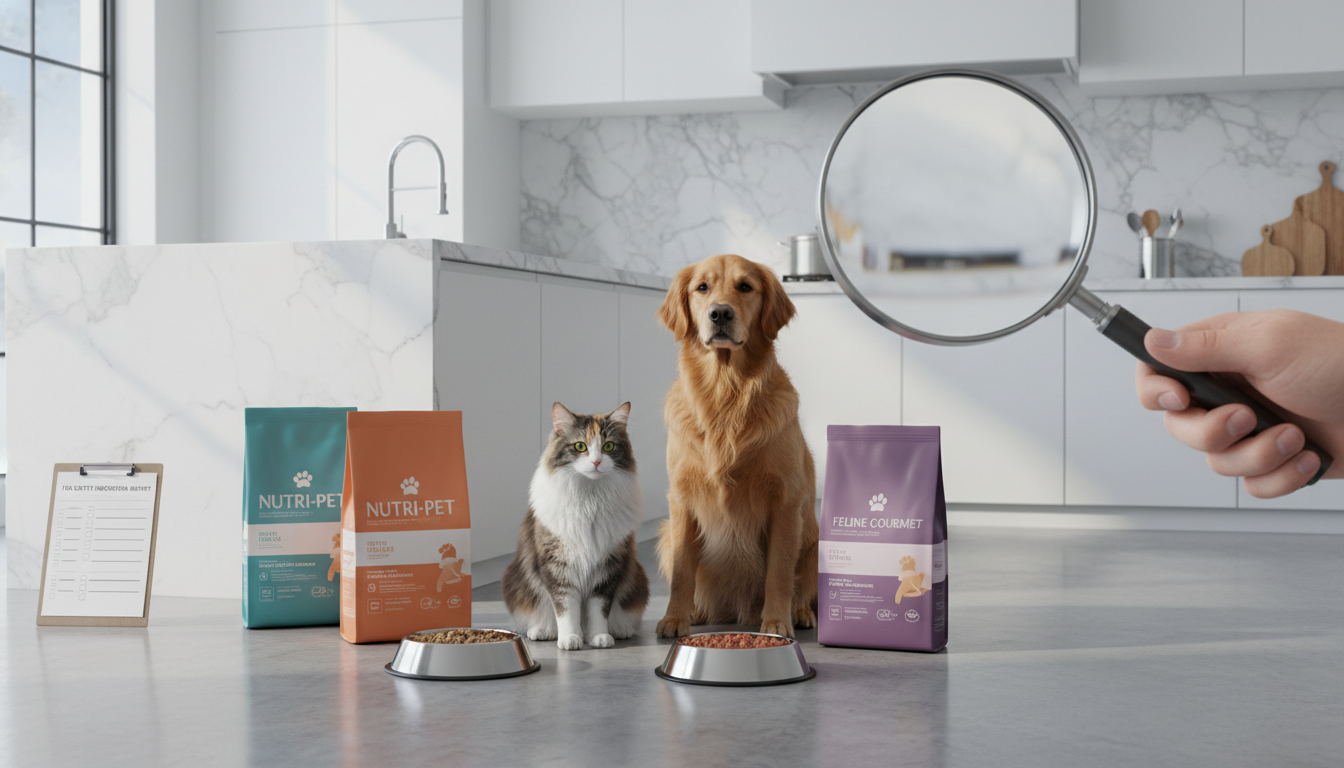
Pet food safety is something most pet owners take for granted until a recall makes headlines. Yet every year, dozens of pet food products are pulled from shelves due to contamination with harmful bacteria, mold toxins, excessive vitamin levels, or foreign materials. Understanding how the pet food safety system works, what types of contamination pose the greatest risk, and how to verify whether your pet's food has been affected by a recall is essential knowledge for every dog and cat owner.
The US pet food industry is regulated by the FDA at the federal level and guided by AAFCO (Association of American Feed Control Officials) for nutritional standards. Despite these oversight mechanisms, contamination events continue to occur, and the consequences for affected pets can range from mild gastrointestinal upset to organ failure and death. The good news is that with basic awareness and a few proactive habits, you can significantly reduce the risk of feeding your pet a contaminated or unsafe product.
This guide covers the most common types of pet food contamination, explains how to check for active recalls, breaks down what AAFCO labels actually tell you, and helps you distinguish between food allergies and food safety issues. We also highlight brands with consistently strong safety track records to help you make informed purchasing decisions.
Understanding Pet Food Regulation in the US
Pet food in the United States is regulated through a combination of federal and state oversight. The FDA's Center for Veterinary Medicine (CVM) oversees the safety of pet food, including ingredients, manufacturing practices, and labeling. The FDA has the authority to issue recalls, conduct facility inspections, and take enforcement action against manufacturers who produce unsafe products.
AAFCO, while not a regulatory agency itself, establishes the nutritional standards and labeling guidelines that most states adopt into their own feed laws. When a pet food label states that it meets AAFCO nutritional profiles, it means the formula has been formulated to provide at least the minimum levels of required nutrients for the specified life stage (puppy/kitten, adult maintenance, or all life stages).
However, AAFCO compliance is a nutritional floor, not a safety guarantee. A food can meet all AAFCO nutrient minimums while still containing low-quality ingredients, excessive levels of certain nutrients, or contaminants that fall below detection thresholds during routine testing. This is why understanding both the nutritional and safety dimensions of pet food is important. For a deeper dive into ingredient quality, our guides on dog food ingredients to avoid and cat food ingredients to avoid cover the specific ingredients that veterinary nutritionists recommend steering clear of.
How FDA Pet Food Recalls Work
Pet food recalls are initiated when a product is found to be potentially harmful to animals or when it does not comply with FDA regulations. Recalls can be triggered by consumer complaints, routine FDA inspections, state testing programs, or the manufacturer's own quality control testing. There are three classes of FDA recalls:
- Class I: The most serious category, where there is a reasonable probability that the product will cause serious health problems or death. Examples include pet food contaminated with high levels of aflatoxin or containing toxic levels of vitamin D.
- Class II: Products that may cause temporary or medically reversible health problems, or where the probability of serious harm is remote. Salmonella contamination in dry pet food is often classified as Class II.
- Class III: Products that are unlikely to cause adverse health effects but violate FDA regulations. Label errors or minor formulation deviations typically fall into this category.
It is important to understand that recalls can be either voluntary (initiated by the manufacturer) or mandated by the FDA. The vast majority of pet food recalls are voluntary, meaning the manufacturer identified or was alerted to a problem and chose to recall the product. FDA-mandated recalls are rare and typically occur when a manufacturer refuses to voluntarily recall a product that the FDA has determined is unsafe.
Common Contaminants: Aflatoxin, Salmonella, and Heavy Metals
Understanding the most common types of pet food contamination helps you assess the severity of any recall and know what symptoms to watch for in your pet.
| Contaminant | Health Risk | Severity | Symptoms to Watch For |
|---|---|---|---|
| Aflatoxin (mycotoxin) | Liver damage, liver failure | Potentially lethal | Loss of appetite, vomiting, jaundice, lethargy |
| Salmonella | GI infection, sepsis (rare) | Serious (also risk to humans handling food) | Diarrhea, vomiting, fever, lethargy |
| Listeria monocytogenes | GI and systemic infection | Moderate to serious | Nausea, diarrhea, fever, stiffness |
| Excess Vitamin D | Kidney failure, calcium toxicity | Potentially lethal | Excessive thirst, frequent urination, weight loss |
| Heavy metals (lead, arsenic) | Neurological damage, organ toxicity | Chronic exposure concern | Often no acute symptoms; long-term effects |
| Foreign objects (metal, plastic) | Choking, GI perforation | Variable | Choking, vomiting, refusal to eat |
| Melamine / cyanuric acid | Kidney failure | Potentially lethal | Decreased appetite, vomiting, increased thirst |
Aflatoxin contamination deserves particular attention because it has been responsible for the most lethal pet food safety events in recent years. Aflatoxins are produced by mold that grows on corn and other grains, particularly in warm and humid storage conditions. In 2020-2021, a major aflatoxin contamination event resulted in the deaths of over 100 dogs across multiple states, prompting one of the largest pet food recalls in recent history. The incident underscored the importance of proper ingredient sourcing, testing, and storage in pet food manufacturing.
The AAFCO Label and What It Actually Guarantees
Every commercial pet food sold in the United States should carry an AAFCO nutritional adequacy statement. Understanding what this statement tells you and, equally importantly, what it does not tell you, is key to evaluating any pet food product.
The AAFCO statement will indicate one of two things: the food was "formulated to meet" AAFCO nutrient profiles (meaning it was designed to contain the right nutrients based on its recipe), or the food "has been substantiated by feeding trials" (meaning it was actually fed to dogs or cats in a controlled study to verify that the animals maintained health on the diet). Feeding trial validation is considered a more robust standard because it tests real-world performance, not just theoretical nutritional content on paper.
What AAFCO does not guarantee includes ingredient quality beyond basic safety, the digestibility or bioavailability of nutrients, the absence of contaminants below regulatory thresholds, the long-term health effects of the diet, or the ethical sourcing of ingredients. AAFCO sets a nutritional baseline, but the best pet foods exceed these minimums significantly in both ingredient quality and nutritional completeness.
Pet Food Allergies vs. Food Intolerance
Pet owners often confuse food safety issues with food allergies or intolerances. While all three can make your pet sick, they have different mechanisms and require different responses.
A food allergy is an immune system response to a specific protein in the food. Common allergens for dogs include beef, dairy, chicken, wheat, and soy. For cats, common allergens include fish, beef, chicken, and dairy. Food allergies typically manifest as skin issues (itching, ear infections, hot spots) rather than gastrointestinal symptoms, though GI symptoms can occur as well. True food allergies require an elimination diet to diagnose and lifelong avoidance of the triggering protein.
A food intolerance is a digestive system response that does not involve the immune system. It typically causes gastrointestinal symptoms like diarrhea, gas, and vomiting. Food intolerances are generally less severe than allergies and may be related to a specific ingredient, additive, or even a change in food brand or formula.
A food safety issue involves contamination or spoilage that would affect any animal consuming the product, regardless of individual sensitivities. If your pet suddenly becomes ill on a food they have been eating without issue, contamination or spoilage should be considered alongside allergic reactions.
If your pet shows signs of illness after eating, save the food packaging and note the lot number and expiration date. This information is critical if a recall is later issued and can help your veterinarian determine whether the food itself is the likely cause. For broader symptom evaluation, our dog illness symptoms checker can help you assess the severity of what you are seeing.
How to Check if Your Pet's Food Has Been Recalled
Staying informed about pet food recalls is one of the simplest and most impactful things you can do for your pet's safety. Here is how to check:
- FDA Recall Portal: The FDA maintains a searchable database of all animal feed and pet food recalls. This is the most authoritative and up-to-date source for recall information.
- Manufacturer websites: Responsible manufacturers post recall notices prominently on their websites and may offer email alerts for affected products.
- Your veterinarian: Veterinary clinics often receive recall notifications directly from manufacturers and distributors and can alert you if a product you use is affected.
- Pet food tracking services: Several independent organizations and websites aggregate recall data and offer email or app-based notifications when new recalls are issued.
When checking a recall, you need to match three pieces of information from your product: the brand and product name, the lot number (printed on the package, usually near the expiration date), and the expiration or best-by date. A recall for a specific product only applies to the specific lot numbers listed in the recall notice. Having the same brand and product but a different lot number means your package is not affected.
What Veterinary Nutritionists Recommend Looking For
Board-certified veterinary nutritionists (those holding a DACVN credential) consistently recommend evaluating pet food based on several factors that go beyond marketing claims:
- Manufacturer transparency: Reputable companies willingly share information about their sourcing practices, manufacturing facilities, quality control testing protocols, and the qualifications of the nutritionists who formulate their diets.
- In-house quality testing: The best manufacturers test both incoming ingredients and finished products for contaminants including heavy metals, mycotoxins, and bacterial pathogens. Not all companies perform this level of testing.
- Feeding trial validation: Foods that have undergone AAFCO feeding trials provide a higher level of nutritional assurance than those that are simply formulated to meet nutrient profiles.
- Recall history and response: No manufacturer is immune to quality issues, but how a company responds to a problem matters. Prompt, transparent recalls with clear consumer communication indicate responsible management. Delayed or incomplete recalls are a warning sign.
- Employing board-certified veterinary nutritionists: Companies that have full-time, board-certified veterinary nutritionists on staff (not just consultants) tend to produce more nutritionally sound and safe products.
Trusted Pet Food Brands with Strong Safety Records
These brands have demonstrated consistently strong safety practices, transparent manufacturing, and a commitment to quality control that goes beyond minimum regulatory requirements:
| Brand | Safety Track Record | Testing Practices | Available For |
|---|---|---|---|
| Fromm | Family-owned since 1904, never recalled | In-house testing, small-batch production | Dogs & Cats |
| Orijen / Acana | Strong track record, transparent sourcing | Regional ingredients, third-party tested | Dogs & Cats |
| Wellness | Minimal recall history, responsive when issues arise | Comprehensive ingredient testing | Dogs & Cats |
| Stella & Chewy's | Strong food safety protocols for raw products | High-pressure pasteurization, batch testing | Dogs & Cats |
| Tiki Cat / Tiki Dog | Clean record, human-grade facility for some lines | Ingredient verification, no artificial preservatives | Dogs & Cats |
| Merrick | US-manufactured, strong quality controls | In-house lab, ingredient traceability | Dogs & Cats |
Your Complete Pet Food Safety Checklist
Use this checklist to establish good pet food safety habits that protect your dog or cat from contaminated or unsafe products:
- Record the lot number and expiration date of every bag or case of pet food you purchase. A quick photo with your phone works well.
- Check for recalls regularly using the FDA recall portal or a pet food recall notification service.
- Store dry food in its original bag inside a sealed container. The original bag contains lot number information and is designed to preserve freshness. Pouring kibble directly into a plastic bin without the bag can accelerate fat oxidation and makes it impossible to trace the product if a recall is issued.
- Refrigerate wet food after opening and use within the timeframe recommended on the label (typically 3 to 5 days).
- Wash food and water bowls daily. Bacterial biofilm builds up on pet bowls quickly, and contaminated bowls can make your pet sick even if the food itself is safe.
- Watch for changes in the food. Unusual odor, color, or texture in a new bag of the same product you regularly buy could indicate a quality issue. When in doubt, do not feed it to your pet.
- If your pet becomes ill after eating, save the food. Preserve the remaining food, packaging, and lot number information. Report the incident to the FDA Safety Reporting Portal and contact your veterinarian.
- Choose brands with strong safety records and transparent manufacturing practices. A company's recall history and response to past issues is one of the most reliable indicators of their commitment to safety.
Having pet insurance ensures that if your pet does become ill from a food safety issue, the cost of emergency veterinary care does not prevent you from seeking the treatment they need. For help choosing the right coverage, our best pet insurance for dogs review compares the top providers. And for additional guidance on pet supplements that can support digestive recovery after a dietary incident, our pet supplements guide covers probiotic and digestive support options.